The Hidden Impact Of Vitamin Deficiency
Many people live with a quiet sense that something is wrong: persistent fatigue, irritability, brain fog, or physical symptoms that don’t match their normal health. It is discouraging when routine check‑ups come back “normal,” yet you still do not feel like yourself. This disconnect often leads people to blame stress, aging, or hormones when, in reality, one of the most overlooked causes is a vitamin deficiency.
A vitamin deficiency occurs when your body does not have enough of a specific nutrient to function properly. This can happen in two ways. A primary deficiency develops when you are not consuming enough of the nutrient through food. A secondary deficiency occurs when your intake is adequate, but your body cannot absorb or utilize the vitamin effectively. This distinction matters because many people assume their diet is “fine,” unaware that absorption issues, medications, or gut health problems can quietly deplete nutrient stores.
Vitamins play essential roles in energy production, nerve signaling, immune function, hormone balance, and cellular repair. When levels drop, even slightly, your body compensates, often producing vague symptoms that are easy to dismiss. Over time, these deficiencies can progress into more serious issues, affecting mood, metabolism, neurological function, and long‑term health.
Signs Of Vitamin Deficiency
Vitamin deficiency symptoms vary depending on the nutrient, but they often overlap. This is why deficiencies can be mistaken for thyroid issues, anxiety, depression, or chronic fatigue.
Common signs include:
- Persistent fatigue that does not improve with rest
- Brain fog, forgetfulness, or difficulty concentrating
- Anxiety, irritability, or low mood
- Hair loss or brittle nails
- Numbness or tingling in hands or feet
- Muscle cramps, twitching, or weakness
- Frequent infections or slow wound healing
- Pale or yellow‑tinted skin
- Poor balance or coordination
- Shortness of breath or dizziness
These symptoms may appear gradually, making them easy to dismiss until they become disruptive.
The Most Common Vitamin Deficiencies
While any nutrient can become deficient, research consistently identifies four as the most widespread:
- Vitamin D
- Iron
- Magnesium
- Vitamin B12
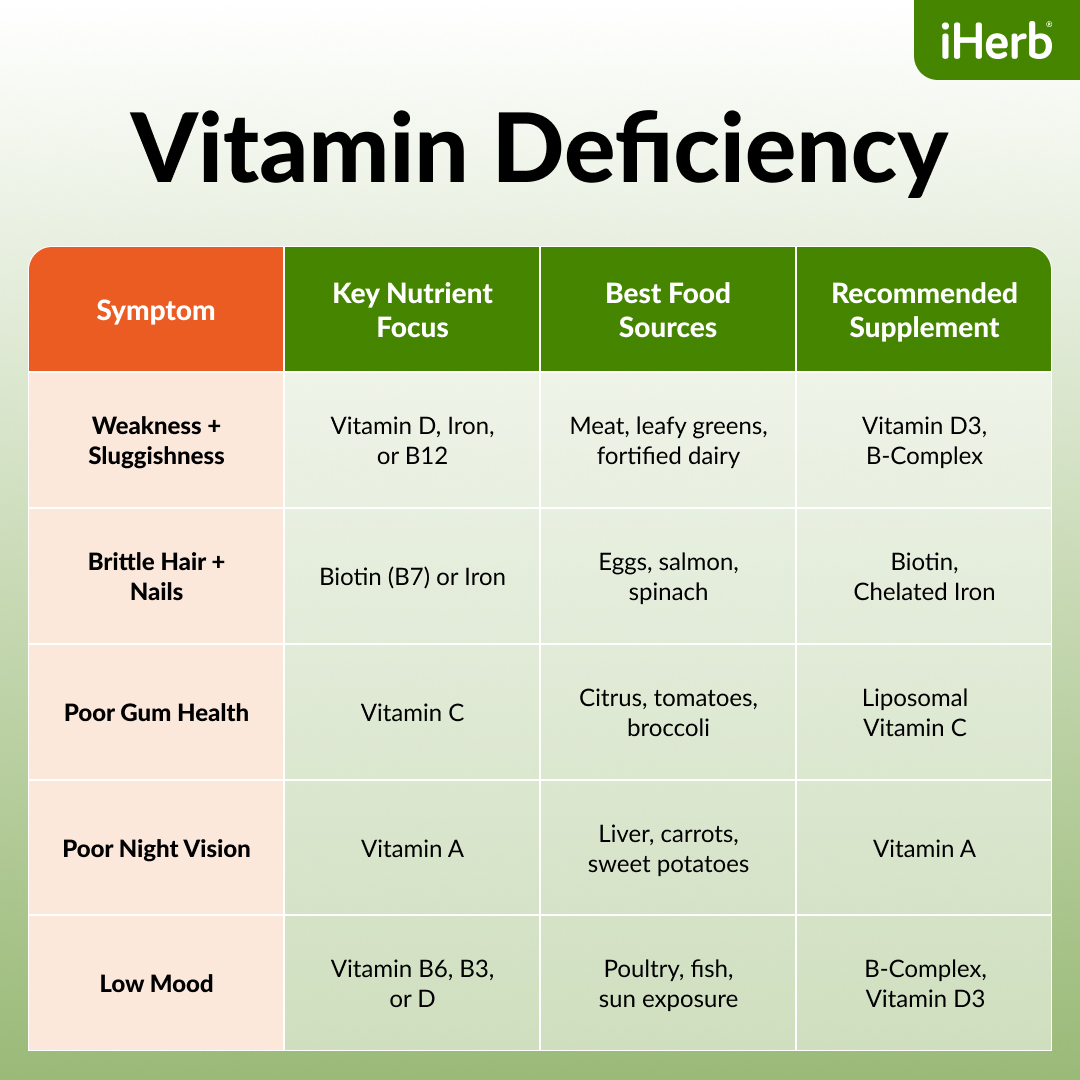
These nutrients support energy production, neurological function, immune health, and metabolic balance, which is why deficiencies in these areas often cause noticeable symptoms. They are also easily depleted by modern diets, digestive issues, and common medications, making them especially vulnerable in today’s population.
Vitamin D Deficiency: Low Mood + Muscle Weakness
Vitamin D deficiency is widespread because few foods naturally contain it, and most people do not get enough direct sunlight to produce adequate levels. Indoor living, sunscreen use, darker skin pigmentation, and northern climates all reduce vitamin D synthesis. Low levels are linked to fatigue, low mood, frequent infections, muscle weakness, and bone discomfort. Because vitamin D behaves more like a hormone than a traditional vitamin, deficiency can influence immunity, inflammation, and metabolic health.
Iron Deficiency: Fatigue + Hair Loss
Iron deficiency is one of the most common nutrient deficiencies worldwide. Iron is required to produce hemoglobin, which carries oxygen in the blood. Low iron reduces oxygen delivery, leading to fatigue, dizziness, shortness of breath, headaches, and hair loss. Women of reproductive age and individuals with digestive issues are especially vulnerable. Even a mild deficiency can affect energy and cognitive performance.
Magnesium Deficiency: Muscle Cramps + Poor Sleep
Magnesium deficiency is frequently overlooked because it is not routinely tested, yet it supports more than 300 biochemical reactions. It plays key roles in muscle relaxation, nerve signaling, blood sugar regulation, and stress response. Modern diets are often low in magnesium due to soil depletion and reliance on processed foods. Stress, caffeine, alcohol, and certain medications further deplete magnesium. Symptoms include muscle cramps, twitching, anxiety, poor sleep, and headaches.
These deficiencies often coexist, especially in people with digestive issues or restrictive diets. Low stomach acid can impair absorption of both B12 and iron, while chronic stress can deplete magnesium and worsen fatigue associated with low vitamin D. When multiple deficiencies overlap, symptoms become more pronounced and harder to trace to a single cause, which is why comprehensive testing is often more helpful than checking one nutrient at a time.
Vitamin B12 Deficiency: Numbness, Tingling, + Brain Fog
Vitamin B12 deficiency is one of the most common and most overlooked nutrient deficiencies. It affects millions of adults, especially older individuals, vegans, vegetarians, and those with digestive disorders.
Why B12 Matters
Vitamin B12 plays a central role in nerve health, red blood cell formation, DNA synthesis, and cognitive function. Without adequate B12, the nervous system begins to misfire. This is why neurological symptoms, numbness, tingling, burning sensations, or balance issues are hallmark signs of deficiency.
Symptoms of B12 Deficiency
B12 deficiency can cause:
- Numbness or tingling in hands and feet
- Burning sensations in the legs or feet
- Brain fog, memory problems, or difficulty focusing
- Fatigue and weakness
- Depression, irritability, or mood swings
- Poor balance or frequent falls
- Shortness of breath or heart palpitations
- A smooth, sore, or swollen tongue
Vitamin B12 plays a central role in supporting healthy nerve function. Suboptimal levels can impact daily comfort, which is why maintaining adequate B12 is essential for a healthy nervous system.
Who Is at Risk?
You are more likely to develop B12 deficiency if you:
- Are over age 50
- Take acid‑reducing medications
- Take metformin
- Follow a vegan or vegetarian diet
- Have had gastric bypass surgery
- Have autoimmune conditions
- Have chronic digestive disorders
Why B12 Deficiency Is Often Missed
Standard blood tests measure total B12, which can appear normal even when the body is functionally deficient. More sensitive markers include methylmalonic acid (MMA), homocysteine, and holotranscobalamin (active B12). These tests help identify early deficiency before neurological symptoms become permanent.
How To Test For A Vitamin Deficiency
If you suspect a deficiency, a healthcare professional can order simple blood tests. Common labs include:
- Vitamin D (25‑OH)
- Vitamin B12
- Folate
- Iron panel (ferritin, iron, TIBC, transferrin saturation)
- Magnesium (RBC magnesium is more accurate than serum)
- Homocysteine
- Methylmalonic acid (for B12)
Testing is especially important if you have persistent fatigue, neurological symptoms, or digestive issues.
What Causes A Vitamin Deficiency?
Vitamin deficiencies are more common than most people realize. They develop gradually and often go unnoticed until symptoms become disruptive. Several factors contribute to low nutrient levels, and understanding these root causes can help you identify your own risk.
The Modern Diet
Today’s food environment is dominated by convenience foods, quick, inexpensive, and engineered for taste rather than nutrition. Highly processed foods are stripped of their natural vitamins and minerals, leaving behind calories without meaningful micronutrients. Even foods that appear healthy, such as packaged breads or cereals, may rely on synthetic fortification rather than naturally occurring nutrients.
Whole foods, fruits, vegetables, nuts, seeds, legumes, and high‑quality proteins contain complex nutrient profiles that work synergistically in the body. When these foods are replaced with processed alternatives, subtle deficiencies begin to develop. Over time, this can lead to low levels of vitamin D, B12, folate, magnesium, and iron, all of which are essential for energy, mood, and metabolic health.
Malabsorption Issues
Even with a nutrient‑dense diet, your body may struggle to absorb vitamins effectively. The digestive system is responsible for breaking down food and extracting nutrients, and when it is compromised, deficiencies can develop quickly. Certain gastrointestinal challenges and everyday digestive imbalances can interfere with nutrient absorption. These conditions damage the intestinal lining or reduce digestive enzymes, preventing vitamins from being properly absorbed.
Age also plays a role. As stomach acid naturally declines, the body becomes less efficient at absorbing B12, iron, calcium, and magnesium. This is why older adults are at significantly higher risk for deficiencies, even with a balanced diet.
Age and Life Stage
Different stages of life place different demands on the body. Pregnant women require higher levels of folate, iron, B12, and choline to support fetal development. Without supplementation, deficiencies can develop quickly and may affect both the mother and the baby.
Older adults face the opposite challenge: reduced appetite, decreased stomach acid, and changes in digestion all contribute to lower nutrient intake and absorption. Additionally, chronic illnesses and medications become more common with age, further increasing the risk of deficiency.
Athletes and highly active individuals also have increased nutrient needs. Intense training depletes B vitamins, magnesium, and antioxidants more rapidly, making deficiencies more likely if intake does not match output.
Medication Depletion
Many commonly prescribed medications interfere with nutrient absorption or metabolism. Acid‑reducing drugs such as proton pump inhibitors (PPIs) and H2 blockers reduce stomach acid, which is essential for the absorption of B12, iron, and magnesium. Metformin, a widely used diabetes medication, is strongly associated with B12 deficiency. Oral contraceptives can lower levels of B6, B12, folate, and magnesium. Even long‑term antibiotic use can disrupt gut bacteria that produce vitamin K and certain B vitamins.
These medication‑related deficiencies often go unnoticed because the symptoms, fatigue, mood changes, tingling, or muscle cramps, are attributed to stress or aging rather than nutrient depletion.
Frequently Asked Questions
What are the most common vitamin deficiencies?
The most common deficiencies are vitamin D, vitamin B12, iron, and magnesium. These nutrients are essential for energy, immunity, and neurological function.
How can I test for a vitamin deficiency?
A healthcare provider can order blood tests to check levels of vitamin D, B12, folate, iron, magnesium, and more. Additional tests, such as homocysteine or MMA, may be used to evaluate B12 status.
Can a vitamin deficiency cause weight gain?
Indirectly, yes. Deficiencies in vitamin D or B12 can cause fatigue, lower activity levels, and affect metabolism, factors that may contribute to weight gain over time.
References:
- Cleveland Clinic. Vitamin deficiency: types, symptoms, diagnosis. Cleveland Clinic. Updated 2025. https://my.clevelandclinic.org/health/diseases/vitamin-deficiency
- Mayo Clinic. Vitamin deficiency anemia: symptoms & causes. Mayo Clinic. Updated 2025. https://www.mayoclinic.org/diseases-conditions/vitamin-deficiency-anemia/symptoms-causes/syc-20355025
- National Institutes of Health, Office of Dietary Supplements. Vitamin D fact sheet. NIH ODS. Updated 2024. https://ods.od.nih.gov/factsheets/VitaminD-Consumer/
- National Institutes of Health, Office of Dietary Supplements. Vitamin B12 fact sheet. NIH ODS. Updated 2024. https://ods.od.nih.gov/factsheets/VitaminB12-Consumer/
- National Institutes of Health, Office of Dietary Supplements. Iron fact sheet. NIH ODS. Updated 2023. https://ods.od.nih.gov/factsheets/Iron-Consumer/
- National Institutes of Health, Office of Dietary Supplements. Magnesium fact sheet. NIH ODS. Updated 2023. https://ods.od.nih.gov/factsheets/Magnesium-Consumer/
DISCLAIMER:
These statements have not been approved by the Food and Drug Administration. These products are not intended to diagnose, treat, cure, or prevent disease.



























































 Table of Contents